
Table of Contents
- A Narrow Reassurance: No Strike Today
- Heightened Alerts at US Posts Across the Region
- The Intelligence Picture: Conflicting Assessments
- Iran’s Opening: Talks, Hormuz and the Blockade
- Qatar’s Mediation and the Mecca Pact Talks
- Yemen’s Front: Houthi Claims Against Saudi Oil and Airports
- The Wider War: Oil, Shipping and the Strait of Hormuz
- The Political Calendar: Midterms and the Decision Ahead
- What Happens Next
A Narrow Reassurance: No Strike Today
President Donald Trump has ruled out a military strike on Iran for the day, telling reporters there would be no attack on Sunday, 26 October, even as tensions across the Middle East continued to climb. The remark was deliberately narrow. It removed one day from the table. It did not settle the larger question that has dominated Washington’s debate for weeks: whether the United States will return to full military action against Iran, or whether it will instead pursue a negotiated settlement to a conflict that, according to reports, has been running since late February.
Speaking as he left the White House for a campaign rally in Michigan, Trump was asked whether fresh strikes could come within hours. He first said he would never reveal such plans in advance, and then gave a direct answer. “There will not be a strike today,” he said, according to reports of the exchange. The phrasing mattered because it left everything else open. A strike tomorrow, next week, or after the American midterm elections was neither promised nor ruled out, and the administration’s military preparations in the region have continued in the meantime.
Earlier on Sunday, in an interview with Fox News’ “Sunday Morning Futures”, Trump had framed the choice before him in stark terms. “I have a decision to make: Do I finish it off, which would be very easy to do, or do I make a deal?” he said, adding, “We don’t play games.” The two options he described capture the tension at the heart of American policy right now. One path leads back to war, on a scale that officials have reportedly described as larger than earlier limited strikes. The other leads to diplomacy, through intermediaries, in talks that have reportedly been stalled for weeks. Sunday’s statement bought time. It did not choose between them.
Heightened Alerts at US Posts Across the Region
While the president was ruling out a strike for the day, American officials were quietly moving to protect American personnel across the region. The United States government has put employees in the Middle East on heightened alert and moved to reduce personnel levels at embassies and consulates, according to US officials cited by the New York Times. The reason, those officials said, was intelligence indicating that Iran is in an advanced stage of planning attacks against US citizens.
The State Department initially confirmed that people were leaving Saudi Arabia, according to reports, and a US official has since indicated that the moves extend to other countries in the region as well. The pattern is familiar from earlier moments of crisis in the Middle East: when the risk of retaliation rises, diplomatic and military staff are thinned out, families are moved, and security postures are tightened, even before any shot is fired. What makes this moment different is the breadth of the concern. The threat is not described as limited to a single country or a single facility, but as a regional risk affecting Americans across the Middle East.
For the people who work in those missions, and for their families, such decisions are never abstract. A reduced presence changes how an embassy functions, how quickly it can help citizens in trouble, and how visible American diplomacy is in a host country. For host governments, it is also a signal, and not a welcome one. A thinning American presence can be read as a sign that Washington expects trouble, which in turn can unsettle markets, allies, and ordinary citizens who have no part in the confrontation. That is why such moves are usually made quietly, and why their confirmation, even in part, tends to attract attention.
The Intelligence Picture: Conflicting Assessments
Behind the public statements lies a more complicated intelligence picture, and one that even the president has acknowledged is divided. Trump has reportedly said the United States has two very different sets of intelligence reports on Iran, a remark that helps explain why the public messaging has sometimes seemed to pull in two directions at once. On one side are warnings of an imminent Iranian threat, serious enough to justify heightened alerts and reduced staffing. On the other side are assessments that suggest restraint, diplomacy, or a different timeline may still be possible.
According to a memo obtained by Axios, the US Director of National Intelligence, Jay Clayton, raised alarms to Secretary of State Marco Rubio about the threat picture. The details of that memo have not been made public in full, and its precise conclusions remain a matter of reporting rather than official disclosure. What can be said is that senior officials at the top of the American government are treating the threat as real enough to act on, while the president himself has publicly kept the door open to a deal.
That tension is not unusual in a crisis. Intelligence is rarely a single, settled verdict. Different agencies weigh different sources, different analysts reach different conclusions, and political leaders must decide how much weight to give each view. The risk for the public is that selective leaks and partial disclosures can create a confusing picture, in which every development seems to point in a different direction. The risk for policymakers is greater: acting on a warning that turns out to be overstated can start a war nobody wanted, while dismissing a warning that turns out to be accurate can leave people exposed. Sunday’s pause, narrow as it was, can be read as an attempt to hold that balance for one more day.
Iran’s Opening: Talks, Hormuz and the Blockade
Iran, for its part, has signalled that it remains open to talks, but on terms that Washington has so far resisted. The Iranian Ambassador to Pakistan, Reza Amiri Moghadam, said on Saturday that Iran remains open to negotiations with the United States under a Pakistan-brokered interim deal reached in June to end the conflict, according to AP reporting. The ambassador said Iran had recently conveyed, through Pakistan, that it was prepared to reopen the Strait of Hormuz if the United States lifted its naval blockade. He accused President Trump of rejecting that proposal by insisting the blockade would continue.
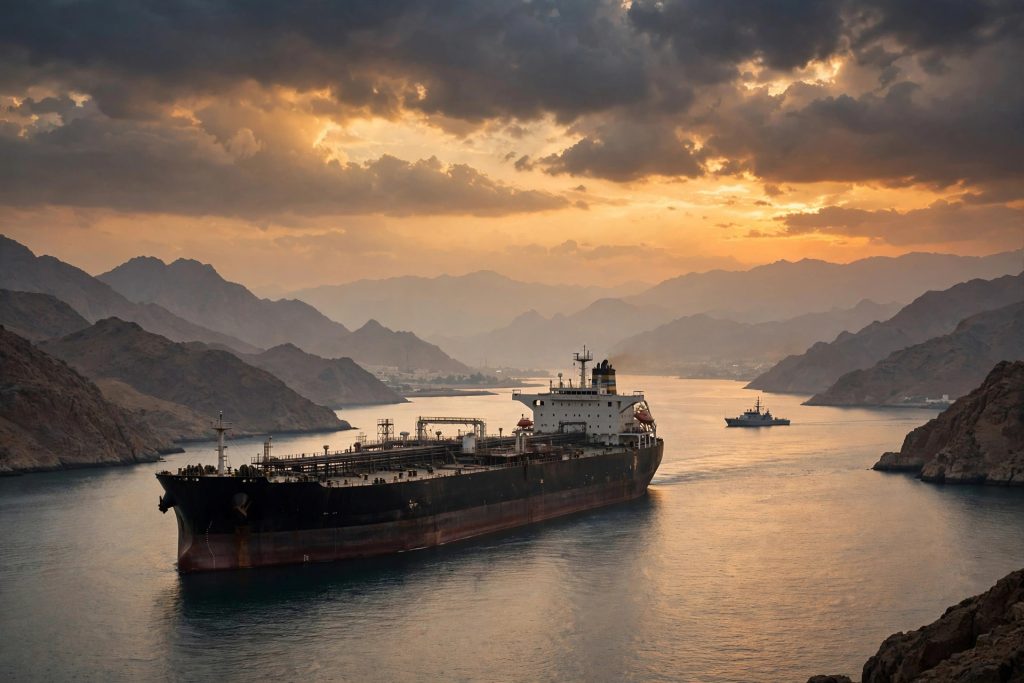
The Strait of Hormuz is one of the world’s most important shipping chokepoints, and its status has been central to the conflict. Much of the region’s oil passes through it, and its largely shut status during the war has forced exporters to rely on alternative routes, including Saudi Arabia’s East-West pipeline. An offer to reopen the strait in exchange for lifting the blockade would, if genuine, be a significant step, because it would restore a major artery of global energy trade. It would also require Washington to give up a powerful lever of pressure, which may explain why it has reportedly not been accepted.
Iran has also warned that renewed attacks by the United States and Israel would not produce a different outcome from previous operations. That message serves two purposes. To its own public, it projects defiance and resilience. To Washington and its allies, it warns that further strikes would not achieve a decisive result, while risking a wider retaliation. Whether that assessment is accurate is impossible for outsiders to verify, but it shapes the calculation on both sides. A government that believes it can absorb another round of strikes is less likely to make concessions under threat, and more likely to wait for the political calendar in Washington to change the equation.
Qatar’s Mediation and the Mecca Pact Talks
Diplomacy has not stopped, even as military preparations continue. Qatari mediators were in Tehran on Sunday, in an effort an official described to Reuters as coordinated with Washington to lower regional tensions. Qatar has played this role before, acting as a channel between parties that do not talk directly, and its involvement suggests that, behind the public rhetoric, messages are still passing through intermediaries. Iran says those messages continue, even as Tehran rejects demands it describes as amounting to complete surrender.
Separately, top officials from the Mecca Pact countries — Saudi Arabia, Turkey and Pakistan — are reportedly set to meet Iranian officials in Tehran on Monday to discuss regional coordination. According to people with knowledge of the matter cited in reports, the planned talks would be the first high-level contact between Iran and all members of the three-nation bloc since Saudi Arabia came under escalating attacks from Yemen’s Iran-aligned Houthis. That timing is significant. It means the same governments most exposed to the fighting are also the ones trying to open a diplomatic channel, and that their meeting comes at a moment of maximum strain.
The presence of multiple mediators — Qatar, Pakistan, and the Mecca Pact bloc — also tells a story about the region. No single channel has been sufficient, and no single capital trusts the process enough to rely on it alone. Each mediator brings different relationships and different leverage, and each risks being blamed if the effort fails. For now, though, the fact that talks are being attempted at all is a reason for cautious attention, even if a breakthrough remains far from certain.
Yemen’s Front: Houthi Claims Against Saudi Oil and Airports
The most immediate violence reported on Monday came not from Iran itself, but from Yemen. Yemen’s Iran-aligned Houthis said on Monday they had attacked Saudi Arabia’s East-West crude oil pumping stations and Riyadh airport, according to Reuters. There was no immediate Saudi confirmation of those attacks, and the claims should be treated with that caution in mind. The Houthis have been firing ballistic missiles and drones at Saudi airports, ports and oil installations, turning the kingdom into a pressure point in the wider war.
The Saudi-led coalition in Yemen said earlier it had destroyed two ballistic missile launchers in the capital, Sanaa, including one used to fire a missile towards Riyadh that the coalition said it had intercepted. That exchange captures the rhythm of the Yemen front: claims of strikes, claims of interceptions, and a fog of uncertainty about what actually hit its target. What is not in doubt is the pattern. The Houthis also said on Saturday they had targeted the East-West pipeline, crude oil pumping stations, an Aramco facility in Yanbu and the Rabigh refinery, again without Saudi confirmation.
The human cost of this front has already been severe. The Houthis also said they had struck Riyadh’s King Khalid International Airport, which resumed operations at two terminals on Sunday after an attack claimed by the group earlier this month reportedly killed 13 people, described as the deadliest in the kingdom in more than a decade. An airport is a civilian target by any measure, and an attack on one reverberates far beyond its immediate victims, disrupting travel, commerce and the sense of safety in a capital city. It also raises the stakes for every government in the region, because it suggests that the war’s reach is expanding, not contracting.
The Wider War: Oil, Shipping and the Strait of Hormuz
The economic consequences of the conflict are already visible, and they help explain why the fighting in Yemen and the standoff over Hormuz matter to people far from the region. Saudi Arabia temporarily shut down its 1,200-kilometre East-West pipeline in September as a precaution after a drone attack that Riyadh and Baghdad said originated in Iraq. The pipeline has served as a key route for Middle East oil exports while the Strait of Hormuz has been largely shut by the war. When both routes are under threat at the same time, the world’s energy supply becomes more fragile, and the risk of price shocks rises.
For ordinary households, that fragility can translate into higher fuel and heating costs, and for governments it can mean difficult choices about reserves, subsidies and trade. For the region’s exporters, it means revenue is hostage to security conditions they do not fully control. The Houthi campaign against Saudi oil infrastructure appears designed to exploit exactly that vulnerability, putting pressure on Riyadh and, through Riyadh, on Washington, to change course. Whether that strategy succeeds depends on how much disruption the global market can absorb, and on how long Saudi defences can keep pace with the volume of missiles and drones being fired.
The United States has also been building up its military presence in the region, sending more forces towards the Persian Gulf, including, according to reports, a third aircraft carrier group. That buildup is both a deterrent and a preparation. It signals to Iran that Washington has the capacity to act, and it gives the president options if he chooses the military path. It also increases the risk of an accident or miscalculation, because more ships, aircraft and personnel in a confined and tense theatre mean more chances for an incident to escalate before diplomats can intervene.
The Political Calendar: Midterms and the Decision Ahead
No account of this crisis is complete without the American political calendar, because it shapes the timing of every decision. The president has signalled that any renewed American strikes would likely wait until after the 3 November midterm elections, according to reports. CNN, citing two US government officials, has reported that an operation could commence within 96 hours of a presidential order, though a final decision has not been reached. Other reports suggest Israel has sought an allied attack before the midterms, while Washington has asked for a delay to allow better preparation. The most likely timeframe for an attack, according to those reports, is after the elections.
That calendar cuts both ways. Delaying action until after the vote avoids the political cost of a new war in the middle of a campaign, and it gives diplomacy more time. But it also creates a volatile window between Election Day and the seating of the new Congress, a period officials have reportedly cautioned could be especially dangerous. Adversaries may use that window to test American resolve, allies may worry about being left exposed, and the incoming political landscape may change the president’s freedom of action in ways that are hard to predict.
Domestic politics is also present in the background. Former President Barack Obama has been campaigning for Democrats ahead of the midterms, criticising what he has described as cruelty and corruption in the Trump administration and highlighting the war with Iran. The former president’s speeches are part of the election campaign, not a direct intervention in foreign policy, but they show how the war has become part of the American political argument. A conflict abroad is rarely debated in isolation at home, and the midterm result may influence how much latitude the president has to pursue either war or diplomacy in the months that follow.
What Happens Next
What happens next will depend on three things, and none of them is settled. The first is whether the diplomatic channels now open — through Qatar, Pakistan and the Mecca Pact — can produce a formula that both Washington and Tehran can accept, without either side feeling it has surrendered. That will require movement on the blockade, on Hormuz, and on the broader terms of any settlement, and so far the public positions of the two sides remain far apart. The second is whether the Yemen front can be contained. If Houthi attacks on Saudi oil and civilian infrastructure continue or escalate, pressure will grow on Riyadh and Washington to respond more forcefully, and the space for diplomacy will shrink. The third is the American decision itself, which the president has framed as a choice between finishing the job and making a deal, and which he has now deferred, at least for one day.
For people living in the region, the stakes of that decision are immediate and personal. They are the ones who live near the targets, who work in the embassies and airports, who depend on the oil revenues and shipping lanes, and who would bear the first consequences of any escalation. For the rest of the world, the stakes are less direct but still real, in energy prices, in shipping security, and in the stability of a region whose conflicts have a habit of spreading beyond its borders.
Monday’s reported meeting in Tehran between the Mecca Pact officials and their Iranian counterparts will be watched closely, as will any further statements from Washington about the timing of a decision. The president’s words on Sunday bought a day of calm, or at least a day without an American strike. Whether that day becomes the start of a negotiation, or simply a pause before a larger confrontation, is the question that now hangs over the Middle East. The answer will not come from a single statement, but from the accumulation of moves and counter-moves in the days ahead — and from whether the channels of communication that remain open are used before they close.
