
Table of Contents
- Why Machado Went Into Exile
- What the Reported Return Means at Home
- Venezuela’s Political Transition and What Could Change
- US-Supported Reconciliation Talks: What Has Been Reported
- What Supporters Are Watching For
- What Critics and the Government Are Watching For
- What Remains Uncertain About Next Steps
Venezuelan opposition leader María Corina Machado has returned to Venezuela, according to reports published on 25 October 2026, ending more than 10 months away from the country.
Her return was widely reported as a significant moment for Venezuela’s opposition, which has faced sustained pressure at home and abroad while its leading figures have been unable to campaign openly or move freely.
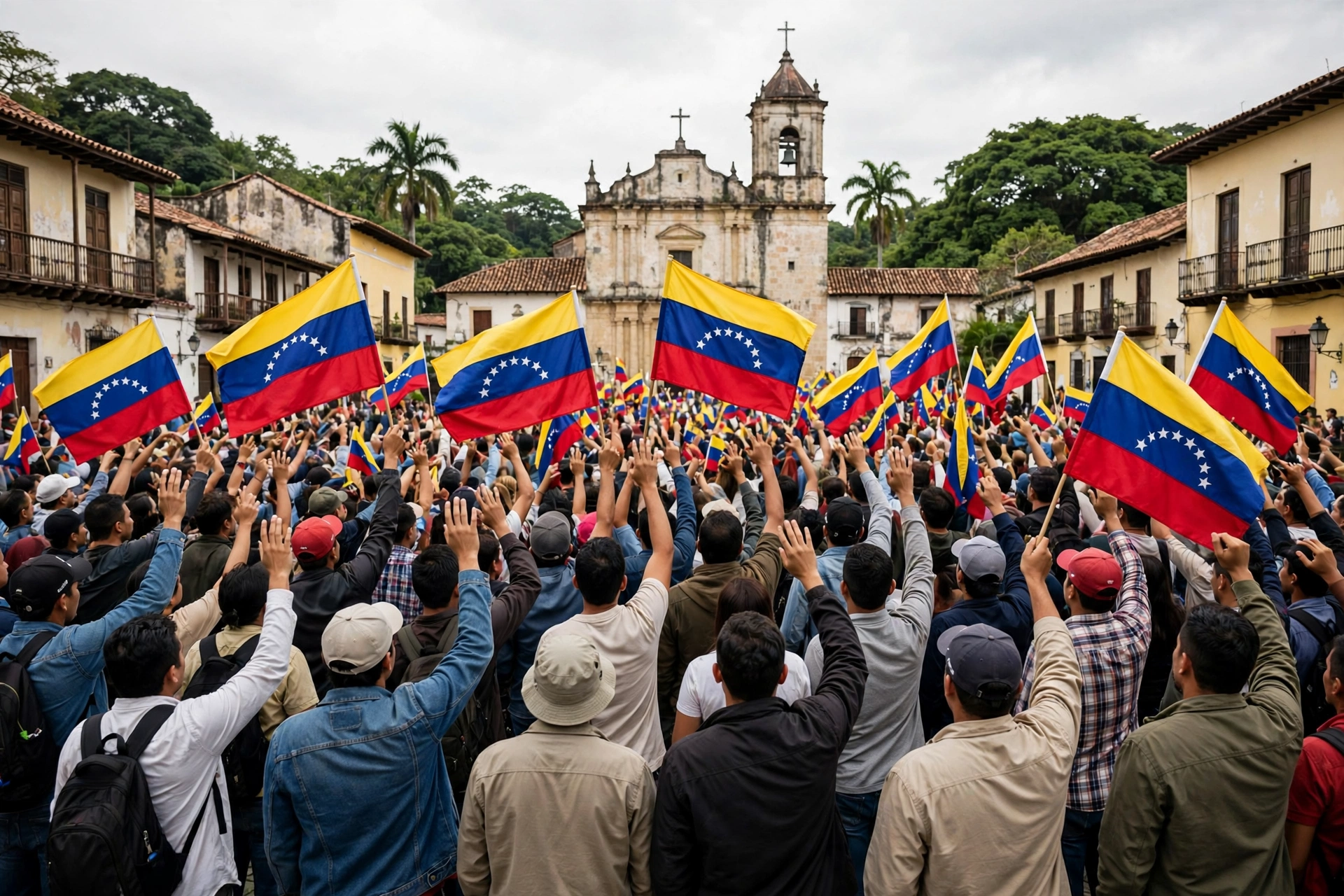
Machado shared a brief message with supporters, writing, “I’m here. With you.” The short message, reported by news outlets, quickly became a focal point for supporters who described the announcement as a moment of hope after a long period of uncertainty.
Reports did not provide a detailed account of how she travelled or the security arrangements around her arrival, and those details remain unconfirmed. This report therefore does not speculate about her route, her means of travel, or any protection arrangements, beyond what outlets have publicly reported.
Machado has been one of the most prominent faces of Venezuela’s opposition in recent years. Her absence from public life in Venezuela had become a symbol, for her supporters, of the constraints facing opposition politics, while her critics and the government in Caracas have long disputed her movement’s claims and standing.
The reported return also drew attention in the United States. Reports noted reactions from President Donald Trump and Secretary of State Marco Rubio, as well as a reaction from opposition figure Edmundo González Urrutia, reflecting the international interest in Machado’s next steps and in Venezuela’s political future.
For supporters, the significance of the reported homecoming lies less in a single day than in what it could mean for opposition organisation in the months ahead. A visible return could, reportedly, help supporters regroup and renew public attention, although the practical limits on opposition activity in Venezuela remain considerable and uncertain.
For now, many questions remain unanswered in public reporting, including what Machado will do next and how authorities will respond to her presence. Supporters will be watching closely for further statements, while observers abroad will be looking for signs of whether her return changes the political dynamics inside Venezuela.
Source note: This report is based on reporting by USA Today and other outlets on 25 October 2026. Unconfirmed details are described as reported or reportedly, and no additional claims have been added beyond those reports.
Why Machado Went Into Exile
To understand why a return after more than ten months matters, it helps to place Machado’s absence in a longer story. For years, Venezuela’s politics have been shaped by a deep dispute over who holds legitimate power, how elections are run, and how far opposition activity is allowed to go. Machado became a central figure in that dispute not only because of her public profile, but because she represented, for many supporters, a demand for a different political direction and for institutions that they felt had been closed to challenge.
A Long Road in Opposition Politics
Machado has spent years building a reputation as a determined opposition voice, and her supporters have often described her as someone who continued to speak out even when the political space around her narrowed. Her critics, by contrast, have long questioned her strategy and her standing, and the government in Caracas has rejected many of the opposition’s central claims. That division is important because it explains why the same event can be read in very different ways: as a homecoming by one side, and as a contested political move by the other.
Pressure, Restrictions and Leaving Public Life
Reports have described a period in which Machado was unable to campaign openly or to move freely in public life in Venezuela, and in which leading opposition figures faced sustained pressure. In that context, leaving the country was presented by supporters as a consequence of those constraints rather than as a choice made in ordinary circumstances. The precise circumstances of her time away remain a matter of public reporting, and this article does not add detail that has not been confirmed, but the broad picture reported by outlets is one of limited room for open opposition activity.
What the Reported Return Means at Home
A return by a prominent opposition leader is rarely only a personal event. In Venezuela, where public gatherings, media access and political organisation have been contested issues for years, physical presence can change the tone of politics even before it changes any formal outcome. Supporters may feel encouraged to speak more openly, while opponents may see the same presence as a challenge to be answered. For ordinary Venezuelans, the practical meaning will depend less on announcements than on whether daily life, public debate and political activity actually become more open.
A Signal to Supporters
For supporters, the brief message reported on her return carried weight precisely because it was short and direct. After months in which Machado was not visible in Venezuela, a simple statement of presence was read as reassurance that the opposition’s best-known voice had not withdrawn from the struggle. That emotional response matters in politics, because movements often depend on morale, on a sense that their leaders share their risks, and on moments that can bring scattered supporters back into a common conversation.
Organisation, Visibility and Limits
Visibility alone, however, does not automatically create organisation. An opposition movement needs meetings, communication, local networks and a way to reach voters, and all of those activities can be difficult when the space for dissent is limited. Observers will therefore be looking beyond the initial announcement to see whether Machado can appear publicly, travel, meet supporters and speak through media in a sustained way, or whether her presence remains largely symbolic. The difference between those two outcomes will shape how significant this return turns out to be.
Venezuela’s Political Transition and What Could Change
Talk of a political transition in Venezuela has been present for a long time, but the word itself can mean different things to different people. For some, it means a negotiated process that opens the political system, restores checks on power and leads to elections that all sides accept. For others, it is a vaguer hope that change will come gradually through pressure, negotiation or shifting circumstances. Machado’s return does not settle that debate, but it places her back at the centre of it, at a moment when supporters and critics alike are asking whether conditions for any kind of transition are improving, stalling or simply changing form.
Institutions and the Balance of Power
Any lasting transition would involve institutions as well as individuals. Courts, electoral bodies, the armed forces, state media and local government all affect whether opposition activity is possible and whether agreements are honoured. That is why analysts often caution against reading too much into a single return: a leader can come home while the wider balance of power remains largely unchanged. Conversely, a return that is tolerated or even accommodated could be an early sign that some actors within the system are prepared to allow more political space, even if they do not say so openly.
The Opposition’s Next Choices
The opposition also faces choices of its own. It must decide how to balance public mobilisation with negotiation, how to work with figures such as Edmundo González Urrutia, and how to speak to Venezuelans who are tired, sceptical or focused mainly on economic survival. A return can help unify those efforts by giving them a visible centre, but it can also raise expectations that are difficult to meet. If supporters expect rapid change and it does not arrive, disappointment could follow, and that is a risk that opposition leaders themselves will be aware of as they plan their next steps.
US-Supported Reconciliation Talks: What Has Been Reported
International attention has focused in particular on the United States, where reports noted reactions from President Donald Trump and Secretary of State Marco Rubio. That attention reflects a broader reported context: that Washington has at times supported efforts to encourage dialogue, reconciliation or a negotiated path in Venezuela. Such efforts are often described in general terms in public reporting, and the details of any talks are frequently not fully disclosed, which means readers should treat specific claims about them with care.
What Reconciliation Talks Reportedly Involve
Reconciliation talks, as they have reportedly been discussed in Venezuela’s case, are generally understood to involve questions about political participation, the safety and freedom of political actors, the release or treatment of detainees, and the conditions under which elections and public life could become more open. Reports have suggested that such discussions can also touch on economic pressures, international relations and guarantees for those on different sides of the dispute. None of those elements can be confirmed in detail from the reporting on Machado’s return alone, and this article therefore describes them as reported themes rather than as settled agreements.
Why Washington’s Role Matters
Washington’s role matters because the United States has long been an important external actor in Venezuela’s politics, through diplomacy, public statements and economic measures. Support from the United States can give opposition figures greater international visibility, while criticism from Washington can increase pressure on the government in Caracas. At the same time, outside support can be used by critics to question an opposition movement’s independence. That tension helps explain why reactions from US officials are watched closely, but also why they do not by themselves determine what happens inside Venezuela.
What Supporters Are Watching For
Supporters are likely to watch for further direct communication from Machado, for public appearances, and for signs that opposition networks can meet and organise more freely. They will also watch for reactions from other opposition figures and from international partners, and for any indication that talks or negotiations are producing practical changes rather than only statements. Above all, supporters will be looking for evidence that the return is the start of a sustained presence, not a brief moment that fades once the initial news cycle passes.
What Critics and the Government Are Watching For
Critics and the government in Caracas will be watching the same developments from a different perspective. They have long disputed the opposition’s claims and may present Machado’s return as a political manoeuvre, question its timing, or argue that it changes little on the ground. The authorities’ response, whether through statements, legal action, restrictions or tolerance, will be one of the clearest early indicators of how the return is being received by those in power. Observers will therefore pay close attention to official language as well as to any practical steps that follow it.
What Remains Uncertain About Next Steps
For all the attention the return has received, the most important questions remain open. Public reporting has not provided a detailed account of how Machado travelled or what security arrangements, if any, surround her, and those details remain unconfirmed. It is also unclear what her immediate programme will be, how she intends to engage with other opposition figures, and whether any reconciliation process will move forward in public or behind closed doors. Until those questions are answered by further reporting or by Machado herself, any assessment of the return’s significance must remain cautious.
Safety, Movement and Public Activity
Questions about safety and movement are central, but they are also the questions on which the least confirmed information is available. Reports have not described her route or protection arrangements in detail, and this article does not speculate about them. What can be observed, over time, is simpler: whether she is able to move, speak and meet people without interruption. Those observable facts, rather than rumours about how she arrived, are likely to be the most reliable guide to the conditions she now faces.
Timing, Talks and International Response
The timing of the return, and its relationship to any reported reconciliation talks, is another area of uncertainty. It may reportedly reflect a shifting political moment, a negotiated opening, or simply a personal decision to return despite the risks. Without confirmed details, it would be wrong to present any single explanation as fact. International responses in the coming days and weeks may offer further clues, especially if governments, regional bodies or mediators make statements that clarify whether they see the return as part of a wider process or as an isolated event.
In the end, Machado’s reported return is best understood as a significant but unfinished development. It restores a prominent opposition voice to Venezuela after more than ten months away, it has energised supporters and drawn international attention, and it raises real questions about transition, reconciliation and political space. Whether it becomes a turning point will depend on what happens next, on how authorities respond, on how the opposition organises, and on whether reported talks produce changes that ordinary Venezuelans can feel in their daily lives.
