
Table of Contents
- A Night That Changed the Title Race
- A Tense and Physical First Half
- Raphinha Lifts Camp Nou Back Into the Game
- Mbappe Strikes Late to Settle It
- What the Result Means for the La Liga Table
- Mourinho Back in the Clasico Spotlight
- Mbappe Outshines Yamal on the Eve of the Ballon d’Or
- Reaction and What Comes Next
A Night That Changed the Title Race
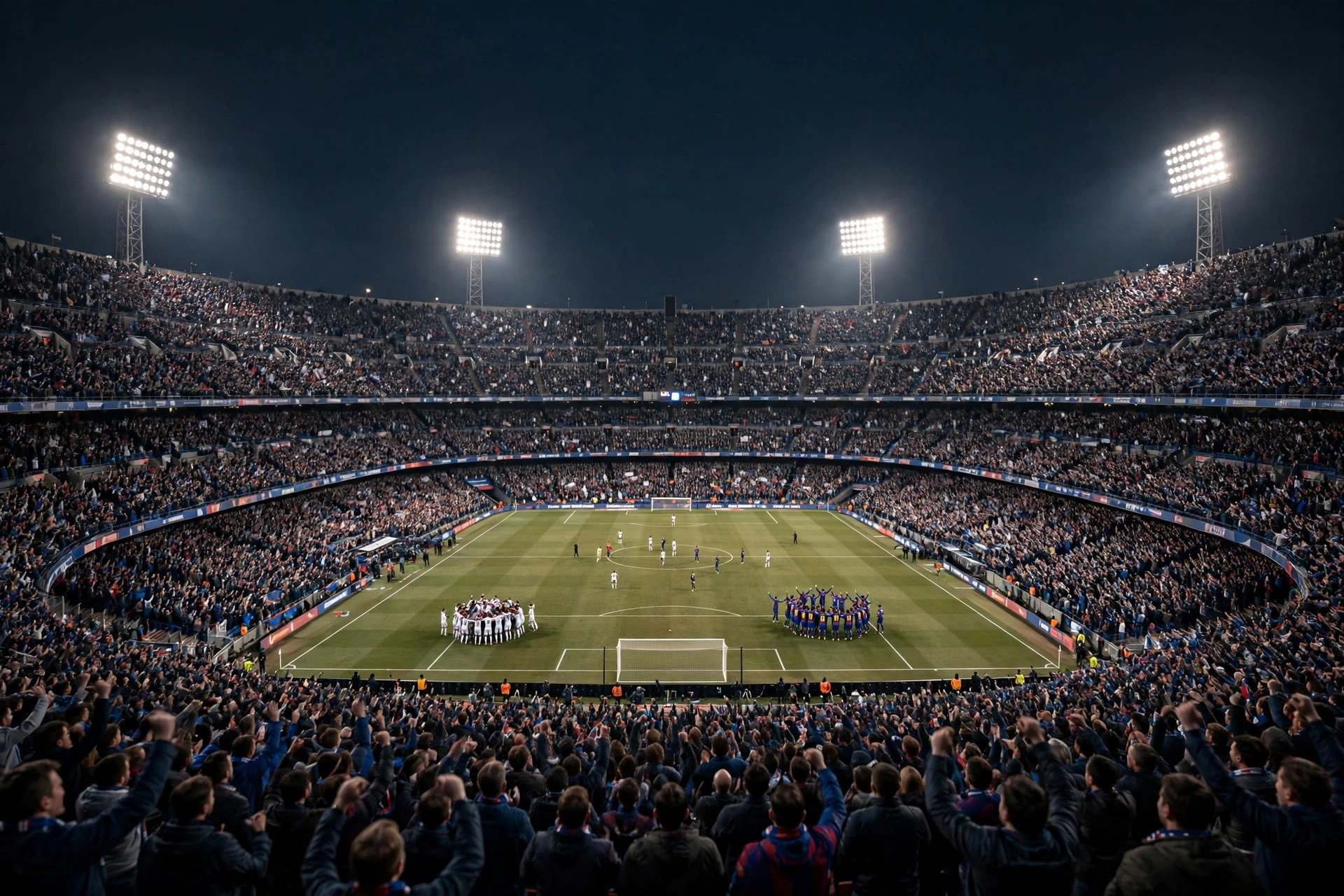
Real Madrid walked into Camp Nou on Sunday, 25 October 2026, knowing that history was against them and that the stakes could hardly have been higher. Barcelona had won every league match they had played this season, and a tenth straight victory would have opened up a commanding lead at the top of La Liga while also setting a new club record for a perfect start. Instead, the visitors left Catalonia with a 2-1 victory that felt like much more than three points. It was a statement, a reminder that the title race is far from settled, and a night that may be remembered as the moment the season truly caught fire.
Kylian Mbappe scored both of Real Madrid’s goals, the second of them in the 87th minute, after Barcelona had fought their way back into the match through Raphinha. The late winner silenced most of the stadium and sent the visiting supporters, players and coaching staff into wild celebrations. Reports of the match described a crackling, intense contest, full of chances, physical challenges and late drama, and that description barely does justice to how the evening unfolded. For long stretches, it looked as though Barcelona would find a way to preserve their unbeaten run. In the end, however, it was Madrid who showed the greater composure in the decisive moments, and that difference proved to be enough.
The result also changed the shape of the table. According to match reports, Real Madrid moved to within three points of the league leaders, cutting a gap that could have stretched to nine points had Barcelona won. That swing of six points in a single evening is why El Clasico matters so much, and why this result will be talked about for weeks. A nine-point lead in late October would not have ended the title race mathematically, but it would have placed enormous psychological pressure on every challenger. A three-point gap, by contrast, keeps the race alive, keeps the pressure on the leaders, and gives Madrid a genuine platform to build on. It also ends the sense of inevitability that had started to gather around Barcelona’s start to the season.
There was more at stake than the table, too. This was the first Clasico of the campaign, the first meeting between two squads full of young stars and established winners, and a match played out in front of a huge global audience. It was also a test of character for both teams after a demanding week in Europe. Barcelona had come into the game after a 4-2 defeat at Paris Saint-Germain earlier in the week, while Madrid were looking to prove that they could win the biggest away match of the season. In that sense, the visitors passed their test in the most dramatic fashion possible, while the hosts were left to reflect on a disappointing week that ended with their first league defeat.
A Tense and Physical First Half
From the first whistle, the match was intense, competitive and physical, with both teams denying each other space and time on the ball. Barcelona, as expected, tried to control possession and build patiently through midfield, while Madrid looked to spring forward quickly whenever they won the ball back. The early exchanges set the tone: strong challenges, hurried clearances and a constant battle for the second ball in midfield. Neither side was willing to give an inch, and the atmosphere inside Camp Nou grew louder with every tackle and every near miss.
Madrid had the first clear opportunity when Arda Guler intercepted a misplaced pass from Pedri and raced into the box, only to fire his shot over the bar. It was a warning that the visitors were ready to punish any mistake, and it forced Barcelona to be a little more careful in their build-up play. Mbappe then sent an acrobatic volley over the bar, while at the other end Anthony Gordon saw a near-post effort parried behind by Andriy Lunin, who was making his first appearance of the season after Thibaut Courtois was ruled out with the flu, according to match reports. Those early chances showed that both goalkeepers would be busy and that the match was unlikely to stay goalless for long.
Barcelona suffered a setback on the half-hour mark when right-back Xavi Espart went down injured and had to be replaced by Alejandro Balde. The change disrupted the hosts’ defensive shape, and Madrid tried to take advantage down that side of the pitch. Lamine Yamal had a golden chance to equalise later in the half when a scramble in the box left him alone with the keeper, but reports said the teenager missed the target completely, wasting what was described as Barcelona’s best opportunity of the first period. Raphinha and Gordon also missed good chances, and Barcelona went into the break behind, knowing they would need to be much more clinical in front of goal after half-time.
The breakthrough came four minutes before half-time, and it arrived in fortuitous fashion. According to match reports, Gerard Martin tried to clear a low cross but fired the ball straight at Mbappe, who found himself in the right place at the right time as the ball flew into the net from six yards out. It was a goal that owed as much to luck as to positioning, and Mbappe himself reportedly looked almost surprised as the ball went in. Madrid, however, will not care how it went in. In a match of this size, taking your chance, however it comes, is often what separates winners from losers, and the visitors went into the dressing room with a lead they had worked hard to earn.
Raphinha Lifts Camp Nou Back Into the Game
The second half began with Barcelona raising the volume, both on the pitch and in the stands. The home supporters, sensing that their team needed a lift, made themselves heard, and the players responded with greater urgency. The ball moved quicker, the pressing became more aggressive, and Madrid were forced deeper into their own half for long periods. It felt like a goal was coming, and when it arrived, it was worth the wait.
In the 61st minute, Raphinha received the ball inside the box and found the far corner with a composed finish, according to match reports. It was his 13th top-flight goal of the season at that stage, a remarkable tally that underlined why he has become such a central figure for Barcelona. The goal was also a reward for his persistence: he had missed chances earlier in the match, but he kept making runs, kept asking for the ball, and kept believing that another opportunity would come. When it did, he took it calmly, and Camp Nou erupted.
The equaliser changed the mood of the match completely. Barcelona were buoyant, and for a period they looked like the team most likely to go on and win it. Joan Garcia, the Barcelona goalkeeper, had to be alert at the other end when Guler’s snapshot was parried away, but the momentum was clearly with the hosts. Lunin then made what reports described as a stunning reflex stop to keep out a header from Martin, a save that may prove to be one of the most important moments of the season. Had that header gone in, Barcelona would have led 2-1 with time running out, and Madrid’s task would have become enormously difficult. Instead, the score stayed level, and the match remained on a knife edge.
That period of Barcelona pressure also revealed something important about this Madrid side: they did not panic. Even when they were pinned back, even when the noise inside the stadium reached its peak, they stayed organised, defended their box in numbers, and waited for a chance to break. It was not always pretty, and at times it looked as though they were simply hanging on, but championship-winning teams often need to survive spells like that. The longer the match stayed level, the more the tension grew, and the more it felt as though one moment of quality, or one mistake, would decide everything.
Mbappe Strikes Late to Settle It
That decisive moment arrived in the 87th minute, and it was created by a piece of skill that will be replayed many times. According to match reports, Jude Bellingham produced a superb turn and spin in midfield before releasing Eduardo Camavinga, who had come on as a substitute, to charge inside the box. Camavinga cut a cross back across the face of goal, and Mbappe was there to finish from close range, simply unable to miss. The celebrations that followed were wild, with reports noting that visiting head coach Jose Mourinho dropped to his knees in delight as his players rushed to celebrate in front of the travelling supporters.
The timing of the goal was brutal for Barcelona. With only a few minutes of normal time remaining, plus five minutes of added time, there was almost no opportunity to respond. Madrid defended their lead with everything they had in the closing stages, throwing bodies in front of shots, clearing crosses and running down the clock wherever possible. Reports described a brief scuffle near the end of the match, as tempers flared in the heat of the moment, but order was restored and the final whistle confirmed a 2-1 victory for the visitors. For Barcelona, it was a painful way to lose a match they had fought so hard to get back into. For Madrid, it was the perfect ending to a week in which they had shown resilience, patience and belief.
Mbappe’s brace took his league tally to ten goals for the season, according to match reports, and it also took him to five goals in two visits to Barcelona as a Madrid player. That is reportedly the most by any Madrid player since the start of the 2013-14 season, ahead of Cristiano Ronaldo and Karim Benzema, who each managed four in that period. Statistics like that put the French striker’s achievement into context: scoring in El Clasico is difficult enough, but scoring repeatedly away from home, in the biggest match in Spanish football, is the mark of a player who thrives under pressure. His first goal may have been fortunate, but his second was the product of movement, anticipation and composure, and it was fully worthy of winning such a match.
What the Result Means for the La Liga Table
The immediate consequence of the result is clear: Barcelona remain top of La Liga, but their lead is now only three points, rather than the nine it could have been. That difference matters enormously, not just in terms of arithmetic, but in terms of psychology. A three-point lead can disappear in a single weekend, and every dropped point from now on will be scrutinised. Barcelona will still believe they are the best team in the league, and their record of nine wins from ten matches supports that belief, but they no longer carry the aura of invincibility that comes with a perfect start. Every opponent they face from now on will believe a little more, having seen Madrid go to Camp Nou and win.
For Madrid, the victory narrows the gap and, just as importantly, gives them a head-to-head advantage that could matter if the teams finish level on points. It also provides a huge boost in confidence after a season in which they have sometimes been questioned. Winning away at Barcelona, ending a perfect run and doing it with a late goal, is the kind of result that can change the mood around a club. Players who were under pressure will feel more trusted, supporters who were anxious will feel more optimistic, and the coaching staff will feel that their plan for the biggest matches is working. The challenge now is to build on that momentum, because a single victory, however dramatic, does not win a title on its own.
The wider title race also remains open to other challengers, but this result has already reshaped the conversation. Instead of talking about whether anyone can catch Barcelona, the discussion now centres on how quickly Madrid can close the remaining gap and whether Barcelona can respond to their first defeat. The next few rounds of fixtures will be watched closely, because the team that handles the aftermath of El Clasico best often gains an advantage. Barcelona must show that one defeat does not become two, while Madrid must show that one great night does not become a false dawn. In a league as competitive as La Liga, consistency over the next month will matter more than the emotion of a single evening, but there is no doubt which team carries the momentum into that period.
Mourinho Back in the Clasico Spotlight
One of the most fascinating subplots of the evening was the return of Jose Mourinho to El Clasico as Real Madrid’s head coach, his first such match since March 2013, according to match reports. Mourinho is no stranger to this fixture, having managed Madrid in some of the most intense Clasicos of the modern era, and his presence on the touchline added an extra layer of drama to an already huge occasion. From the early stages, he was animated, protesting decisions and urging his players on, and he reportedly received a talking-to from referee Juan Martinez Munuera after just ten minutes for protesting a foul awarded against Aurelien Tchouameni. It was a reminder that Mourinho’s competitive edge has not dulled with time.
His unbeaten run in Clasico matches now reportedly stands at six games, with four wins and two draws, dating back to his previous spell in charge of Madrid. That puts him alongside only a small group of Madrid coaches who have enjoyed such a run, with Miguel Munoz and Vicente del Bosque both previously recording seven-match streaks. Whether Mourinho can match or surpass those records will depend on future meetings, but for now, his return to this fixture could hardly have gone better. He set his team up to be compact, disciplined and dangerous on the break, and his substitutions, including the introduction of Camavinga, played a direct part in the winning goal.
There is also a broader point about experience in matches like this. El Clasico can overwhelm younger coaches and players, but Mourinho has lived through its pressure many times before. He understands the noise, the media attention, the tactical chess match and the emotional swings that define the fixture. That experience may have helped Madrid stay calm when Barcelona equalised and the stadium was at its loudest. Instead of chasing the game recklessly, Madrid kept their shape, trusted their plan and waited for the right moment. When that moment came, they took it, and Mourinho’s celebration at the final whistle told its own story about what the victory meant to him and to his team.
Mbappe Outshines Yamal on the Eve of the Ballon d’Or
The match also carried an intriguing individual subplot, because it took place just 24 hours before the 2026 Ballon d’Or ceremony in London, where both Mbappe and Lamine Yamal were among the leading contenders for the prize. Although voting for the award had long since closed, the Clasico offered one final, high-profile stage for the two stars to make their case in front of a global audience. On this occasion, it was Mbappe who provided the decisive reminder of his quality, scoring twice and delivering the winning goal, while Yamal endured a frustrating evening.
According to match reports, Yamal missed a glaring chance to equalise in the first half and was unable to hit the net with any of his five shots, which were worth a team-high 0.51 expected goals. He also reportedly failed to create a single chance and completed only 76.6 percent of his passes. Those numbers tell the story of a young player who was closely marked, denied space and unable to influence the match in the way he usually does. It is important to keep that performance in perspective: Yamal is still a teenager, still developing, and one difficult evening against a strong Madrid defence does not define his season. But in a head-to-head contest with Mbappe, on the biggest domestic stage in Spain, the contrast on the night was stark.
For Mbappe, the performance strengthened his reputation as a player for the biggest occasions. He has now scored in successive visits to Camp Nou, and his ability to find space in the box, even when he is not at his most fluent, remains one of his greatest strengths. His first goal was fortunate, but his positioning for the second, arriving at exactly the right moment to meet Camavinga’s cross, showed the instincts of a world-class striker. Whether that performance influences the Ballon d’Or discussion is another matter, since the votes are already in, but it will certainly shape the narrative around the ceremony and the season ahead. In the court of public opinion, at least, Mbappe won this particular duel.
Reaction and What Comes Next
The reaction to the result is likely to be intense, both in Spain and around the world. For Barcelona supporters, the defeat will be painful, not only because it ended a perfect start, but because it came so late, after they had fought back to level the match. There will be questions about missed chances, about the injury to Espart, about defensive lapses in the closing stages, and about whether the midweek defeat in Paris had taken a toll. Those questions are natural after any defeat, but they should not overshadow what Barcelona have achieved so far this season. Nine wins from ten matches is still an outstanding record, and the team remains top of the league with most of the season still to play.
For Madrid supporters, the victory will be celebrated as one of the great recent Clasico wins. Ending a rival’s perfect start, away from home, with a late winner, is the kind of result that lives long in the memory. There will be praise for Mbappe, for Lunin, whose saves kept Madrid in the match, for Bellingham’s creativity, for Camavinga’s impact from the bench, and for Mourinho’s game plan. There will also be a sense of relief, because Madrid had to win this match to keep the title race alive in a meaningful way. Had they lost, the gap would have felt enormous. Instead, they are back within touching distance, and the season feels wide open again.
What comes next will be just as important as what happened on Sunday night. Barcelona must regroup quickly, recover from the injury disruption, and return to winning ways in their next league match. Their response to adversity will be a test of their character and their title credentials. Madrid, meanwhile, must avoid the trap of believing that one victory has solved everything. They must back up this result with consistent performances, especially in matches where they are expected to win, because titles are won over 38 games, not in a single night. If both teams learn the right lessons from this Clasico, the rest of the season promises to be thrilling, and the return fixture will be circled in every calendar long before it arrives. For now, though, the story of the weekend belongs to Real Madrid, to Kylian Mbappe, and to a late goal that changed the shape of La Liga.
